
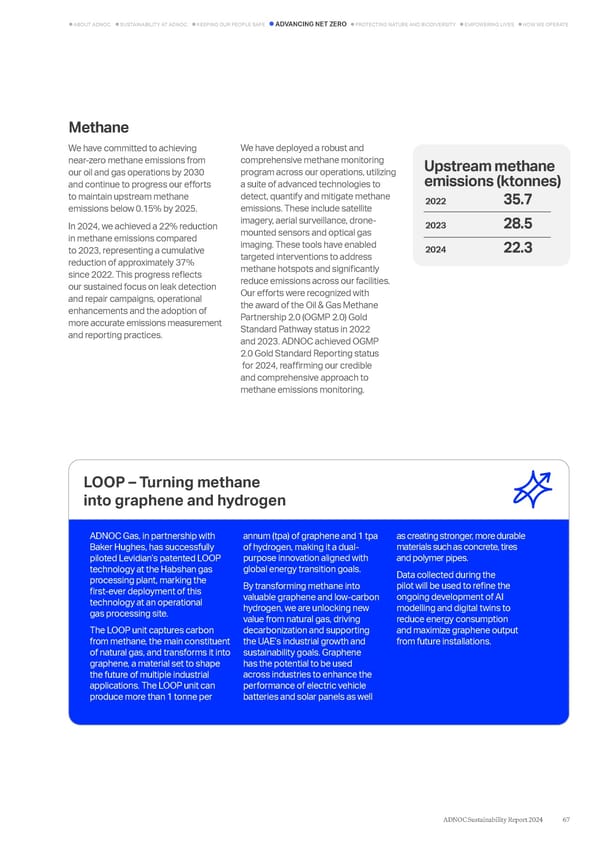
Methane We have committed to achieving near-zero methane emissions from our oil and gas operations by 2030 and continue to progress our efforts to maintain upstream methane emissions below 0.15% by 2025. In 2024, we achieved a 22% reduction in methane emissions compared to 2023, representing a cumulative reduction of approximately 37% since 2022. This progress reflects our sustained focus on leak detection and repair campaigns, operational enhancements and the adoption of more accurate emissions measurement and reporting practices. We have deployed a robust and comprehensive methane monitoring program across our operations, utilizing a suite of advanced technologies to detect, quantify and mitigate methane emissions. These include satellite imagery, aerial surveillance, drone- mounted sensors and optical gas imaging. These tools have enabled targeted interventions to address methane hotspots and significantly reduce emissions across our facilities. Our efforts were recognized with the award of the Oil & Gas Methane Partnership 2.0 (OGMP 2.0) Gold Standard Pathway status in 2022 and 2023. ADNOC achieved OGMP 2.0 Gold Standard Reporting status for 2024, reaffirming our credible and comprehensive approach to methane emissions monitoring. ADNOC Gas, in partnership with Baker Hughes, has successfully piloted Levidian’s patented LOOP technology at the Habshan gas processing plant, marking the first-ever deployment of this technology at an operational gas processing site. The LOOP unit captures carbon from methane, the main constituent of natural gas, and transforms it into graphene, a material set to shape the future of multiple industrial applications. The LOOP unit can produce more than 1 tonne per annum (tpa) of graphene and 1 tpa of hydrogen, making it a dual- purpose innovation aligned with global energy transition goals. By transforming methane into valuable graphene and low-carbon hydrogen, we are unlocking new value from natural gas, driving decarbonization and supporting the UAE’s industrial growth and sustainability goals. Graphene has the potential to be used across industries to enhance the performance of electric vehicle batteries and solar panels as well as creating stronger, more durable materials such as concrete, tires and polymer pipes. Data collected during the pilot will be used to refine the ongoing development of AI modelling and digital twins to reduce energy consumption and maximize graphene output from future installations. LOOP – Turning methane into graphene and hydrogen Upstream methane emissions (ktonnes) 2022 35.7 2023 28.5 2024 22.3 67 ADNOC Sustainability Report 2024 ADVANCING NET ZERO KEEPING OUR PEOPLE SAFE EMPOWERING LIVES HOW WE OPERATE SUSTAINABILITY AT ADNOC ABOUT ADNOC PROTECTING NATURE AND BIODIVERSITY
 ADNOC Sustainability Report 2024: Driving Progress & Prosperity Page 66 Page 68