
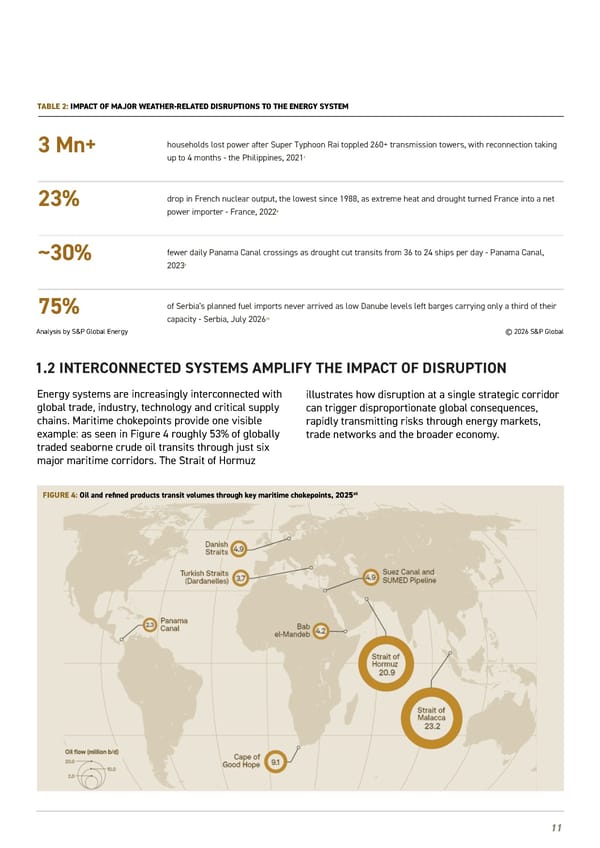
11 Energy systems are increasingly interconnected with global trade, industry, technology and critical supply chains. Maritime chokepoints provide one visible example: as seen in Figure 4 roughly 53% of globally traded seaborne crude oil transits through just six major maritime corridors. The Strait of Hormuz 1.2 INTERCONNECTED SYSTEMS AMPLIFY THE IMPACT OF DISRUPTION Analysis by S&P Global Energy © 2026 S&P Global 3 Mn+ households lost power after Super Typhoon Rai toppled 260+ transmission towers, with reconnection taking up to 4 months - the Philippines, 20217 23% drop in French nuclear output, the lowest since 1988, as extreme heat and drought turned France into a net power importer - France, 20228 ~30% fewer daily Panama Canal crossings as drought cut transits from 36 to 24 ships per day - Panama Canal, 20239 75% of Serbia's planned fuel imports never arrived as low Danube levels left barges carrying only a third of their capacity - Serbia, July 202610 illustrates how disruption at a single strategic corridor can trigger disproportionate global consequences, rapidly transmitting risks through energy markets, trade networks and the broader economy. FIGURE 4: Oil and refined products transit volumes through key maritime chokepoints, 2025xii TABLE 2: IMPACT OF MAJOR WEATHER-RELATED DISRUPTIONS TO THE ENERGY SYSTEM
 ENACT Majlis 2026 Page 10 Page 12