
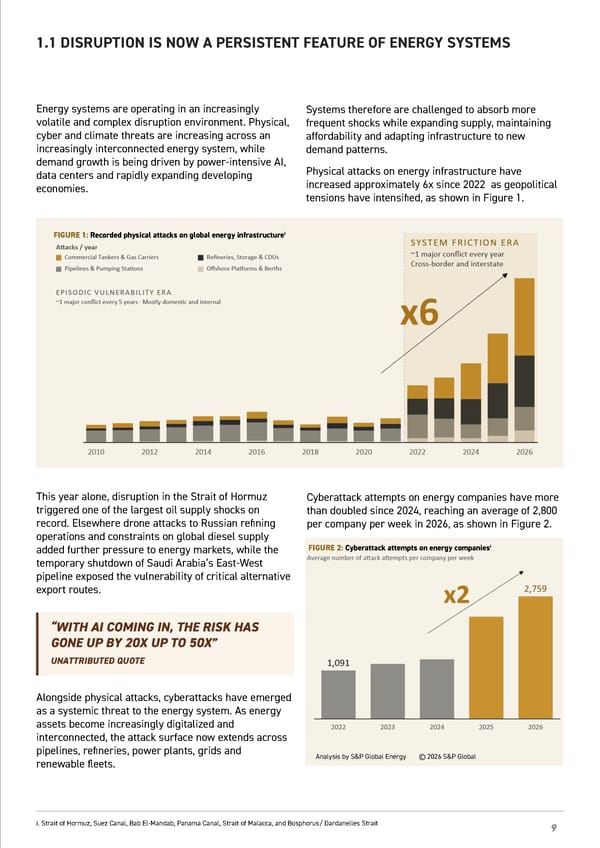
9 Energy systems are operating in an increasingly volatile and complex disruption environment. Physical, cyber and climate threats are increasing across an increasingly interconnected energy system, while demand growth is being driven by power-intensive AI, data centers and rapidly expanding developing economies. This year alone, disruption in the Strait of Hormuz triggered one of the largest oil supply shocks on record. Elsewhere drone attacks to Russian refining operations and constraints on global diesel supply added further pressure to energy markets, while the temporary shutdown of Saudi Arabia’s East-West pipeline exposed the vulnerability of critical alternative export routes. 1.1 DISRUPTION IS NOW A PERSISTENT FEATURE OF ENERGY SYSTEMS i. Strait of Hormuz, Suez Canal, Bab El-Mandab, Panama Canal, Strait of Malacca, and Bosphorus/ Dardanelles Strait Systems therefore are challenged to absorb more frequent shocks while expanding supply, maintaining affordability and adapting infrastructure to new demand patterns. Physical attacks on energy infrastructure have increased approximately 6x since 2022 as geopolitical tensions have intensified, as shown in Figure 1. Alongside physical attacks, cyberattacks have emerged as a systemic threat to the energy system. As energy assets become increasingly digitalized and interconnected, the attack surface now extends across pipelines, refineries, power plants, grids and renewable fleets. UNATTRIBUTED QUOTE “WITH AI COMING IN, THE RISK HAS GONE UP BY 20X UP TO 50X” Cyberattack attempts on energy companies have more than doubled since 2024, reaching an average of 2,800 per company per week in 2026, as shown in Figure 2. FIGURE 1:Recorded physical attacks on global energy infrastructurei Analysis by S&P Global Energy © 2026 S&P Global FIGURE 2:Cyberattack attempts on energy companiesi
 ENACT Majlis 2026 Page 8 Page 10