
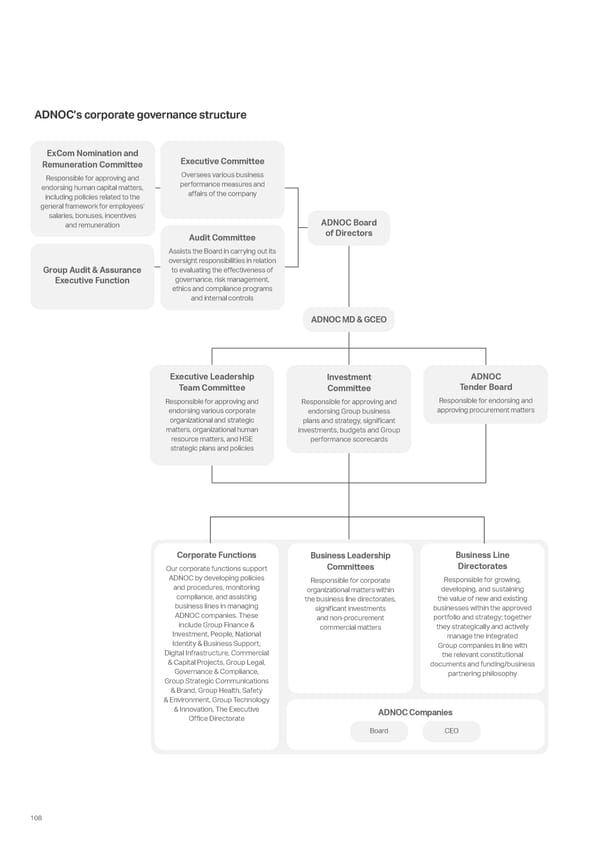
ADNOC’s corporate governance structure ADNOC MD & GCEO Investment Committee Responsible for approving and endorsing Group business plans and strategy, significant investments, budgets and Group performance scorecards Executive Leadership Team Committee Responsible for approving and endorsing various corporate organizational and strategic matters, organizational human resource matters, and HSE strategic plans and policies ADNOC Tender Board Responsible for endorsing and approving procurement matters ADNOC Board of Directors Audit Committee Assists the Board in carrying out its oversight responsibilities in relation to evaluating the effectiveness of governance, risk management, ethics and compliance programs and internal controls Executive Committee Oversees various business performance measures and affairs of the company ExCom Nomination and Remuneration Committee Responsible for approving and endorsing human capital matters, including policies related to the general framework for employees’ salaries, bonuses, incentives and remuneration Group Audit & Assurance Executive Function Business Line Directorates Responsible for growing, developing, and sustaining the value of new and existing businesses within the approved portfolio and strategy; together they strategically and actively manage the integrated Group companies in line with the relevant constitutional documents and funding/business partnering philosophy Corporate Functions Our corporate functions support ADNOC by developing policies and procedures, monitoring compliance, and assisting business lines in managing ADNOC companies. These include Group Finance & Investment, People, National Identity & Business Support, Digital Infrastructure, Commercial & Capital Projects, Group Legal, Governance & Compliance, Group Strategic Communications & Brand, Group Health, Safety & Environment, Group Technology & Innovation, The Executive Office Directorate Business Leadership Committees Responsible for corporate organizational matters within the business line directorates, significant investments and non-procurement commercial matters ADNOC Companies Board CEO 108
 Sustainability Report 2025: Delivering Responsibly Page 105 Page 107