
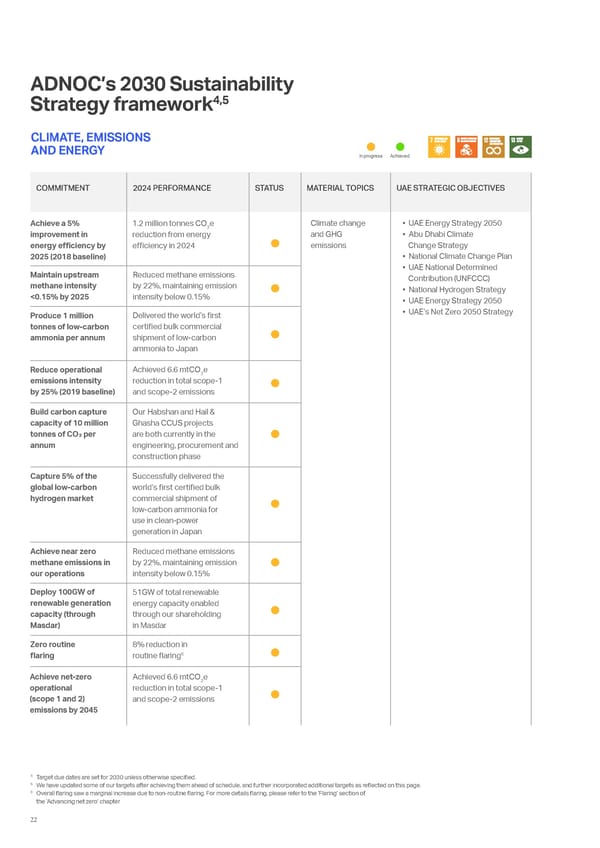
• UAE Energy Strategy 2050 • Abu Dhabi Climate Change Strategy • National Climate Change Plan • UAE National Determined Contribution (UNFCCC) • National Hydrogen Strategy • UAE Energy Strategy 2050 • UAE’s Net Zero 2050 Strategy Climate change and GHG emissions 1.2 million tonnes CO 2 e reduction from energy efficiency in 2024 Achieve a 5% improvement in energy efficiency by 2025 (2018 baseline) Reduced methane emissions by 22%, maintaining emission intensity below 0.15% Maintain upstream methane intensity <0.15% by 2025 Delivered the world’s first certified bulk commercial shipment of low-carbon ammonia to Japan Produce 1 million tonnes of low-carbon ammonia per annum Achieved 6.6 mtCO 2 e reduction in total scope-1 and scope-2 emissions Reduce operational emissions intensity by 25% (2019 baseline) Our Habshan and Hail & Ghasha CCUS projects are both currently in the engineering, procurement and construction phase Build carbon capture capacity of 10 million tonnes of CO₂ per annum Successfully delivered the world’s first certified bulk commercial shipment of low-carbon ammonia for use in clean-power generation in Japan Capture 5% of the global low-carbon hydrogen market Reduced methane emissions by 22%, maintaining emission intensity below 0.15% Achieve near zero methane emissions in our operations 51GW of total renewable energy capacity enabled through our shareholding in Masdar Deploy 100GW of renewable generation capacity (through Masdar) 8% reduction in routine flaring 6 Zero routine flaring Achieved 6.6 mtCO 2 e reduction in total scope-1 and scope-2 emissions Achieve net-zero operational (scope 1 and 2) emissions by 2045 Achieved In progress ADNOC’s 2030 Sustainability Strategy framework 4,5 CLIMATE, EMISSIONS AND ENERGY 2024 PERFORMANCE STATUS MATERIAL TOPICS UAE STRATEGIC OBJECTIVES COMMITMENT 4 Target due dates are set for 2030 unless otherwise specified. 5 We have updated some of our targets after achieving them ahead of schedule, and further incorporated additional targets as reflected on this page. 6 Overall flaring saw a marginal increase due to non-routine flaring. For more details flaring, please refer to the ‘Flaring’ section of the ‘Advancing net zero’ chapter 22
 ADNOC Sustainability Report 2024: Driving Progress & Prosperity Page 21 Page 23