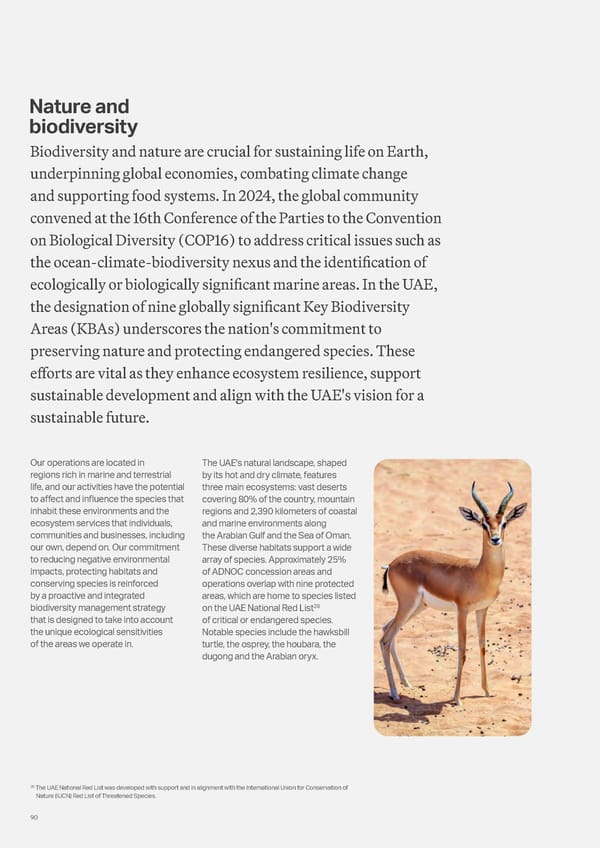
IMAGE GOES HERE Nature and biodiversity Biodiversity and nature are crucial for sustaining life on Earth, underpinning global economies, combating climate change and supporting food systems. In 2024, the global community convened at the 16th Conference of the Parties to the Convention on Biological Diversity (COP16) to address critical issues such as the ocean-climate-biodiversity nexus and the identification of ecologically or biologically significant marine areas. In the UAE, the designation of nine globally significant Key Biodiversity Areas (KBAs) underscores the nation's commitment to preserving nature and protecting endangered species. These efforts are vital as they enhance ecosystem resilience, support sustainable development and align with the UAE's vision for a sustainable future. Our operations are located in regions rich in marine and terrestrial life, and our activities have the potential to affect and influence the species that inhabit these environments and the ecosystem services that individuals, communities and businesses, including our own, depend on. Our commitment to reducing negative environmental impacts, protecting habitats and conserving species is reinforced by a proactive and integrated biodiversity management strategy that is designed to take into account the unique ecological sensitivities of the areas we operate in. The UAE's natural landscape, shaped by its hot and dry climate, features three main ecosystems: vast deserts covering 80% of the country, mountain regions and 2,390 kilometers of coastal and marine environments along the Arabian Gulf and the Sea of Oman. These diverse habitats support a wide array of species. Approximately 25% of ADNOC concession areas and operations overlap with nine protected areas, which are home to species listed on the UAE National Red List 28 of critical or endangered species. Notable species include the hawksbill turtle, the osprey, the houbara, the dugong and the Arabian oryx. 28 The UAE National Red List was developed with support and in alignment with the International Union for Conservation of Nature (IUCN) Red List of Threatened Species. 90
 ADNOC Sustainability Report 2024: Driving Progress & Prosperity Page 89 Page 91