
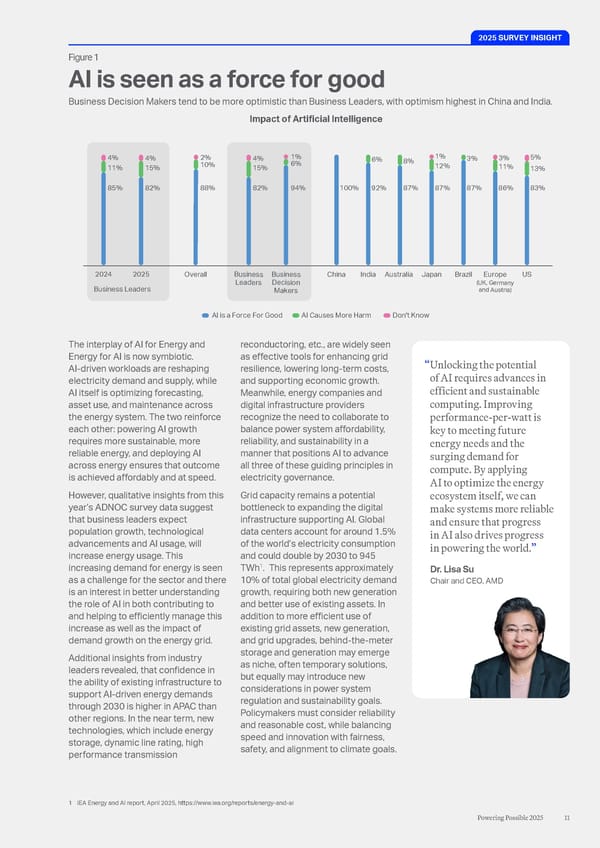
The interplay of AI for Energy and Energy for AI is now symbiotic. AI-driven workloads are reshaping electricity demand and supply, while AI itself is optimizing forecasting, asset use, and maintenance across the energy system. The two reinforce each other: powering AI growth requires more sustainable, more reliable energy, and deploying AI across energy ensures that outcome is achieved affordably and at speed. However, qualitative insights from this year’s ADNOC survey data suggest that business leaders expect population growth, technological advancements and AI usage, will increase energy usage. This increasing demand for energy is seen as a challenge for the sector and there is an interest in better understanding the role of AI in both contributing to and helping to efficiently manage this increase as well as the impact of demand growth on the energy grid. Additional insights from industry leaders revealed, that confidence in the ability of existing infrastructure to support AI-driven energy demands through 2030 is higher in APAC than other regions. In the near term, new technologies, which include energy storage, dynamic line rating, high performance transmission reconductoring, etc., are widely seen as effective tools for enhancing grid resilience, lowering long-term costs, and supporting economic growth. Meanwhile, energy companies and digital infrastructure providers recognize the need to collaborate to balance power system affordability, reliability, and sustainability in a manner that positions AI to advance all three of these guiding principles in electricity governance. Grid capacity remains a potential bottleneck to expanding the digital infrastructure supporting AI. Global data centers account for around 1.5% of the world’s electricity consumption and could double by 2030 to 945 TWh 1 . This represents approximately 10% of total global electricity demand growth, requiring both new generation and better use of existing assets. In addition to more efficient use of existing grid assets, new generation, and grid upgrades, behind-the-meter storage and generation may emerge as niche, often temporary solutions, but equally may introduce new considerations in power system regulation and sustainability goals. Policymakers must consider reliability and reasonable cost, while balancing speed and innovation with fairness, safety, and alignment to climate goals. AI is seen as a force for good Figure 1 Impact of Artificial Intelligence Business Leaders China India Australia Japan Brazil US Europe (UK, Germany and Austria) Business Decision Makers 82% 94% 100% 92% 87% 87% 87% 86% 83% 15% 4% 6% 1% 6% 8% 12% 1% 3% 11% 3% 13% 5% Business Leaders 82% 85% 15% 4% 11% 4% 2024 2025 Overall 88% 10% 2% Don't Know AI is a Force For Good AI Causes More Harm Business Decision Makers tend to be more optimistic than Business Leaders, with optimism highest in China and India. 2025 SURVEY INSIGHT 1 IEA Energy and AI report, April 2025, https://www.iea.org/reports/energy-and-ai “ Unlocking the potential of AI requires advances in efficient and sustainable computing. Improving performance-per-watt is key to meeting future energy needs and the surging demand for compute. By applying AI to optimize the energy ecosystem itself, we can make systems more reliable and ensure that progress in AI also drives progress in powering the world. ” Dr. Lisa Su Chair and CEO, AMD 9 Powering Possible 2025
 Powering Possible 2025: Unleashing AI for Energy and Energy for AI Page 8 Page 10