
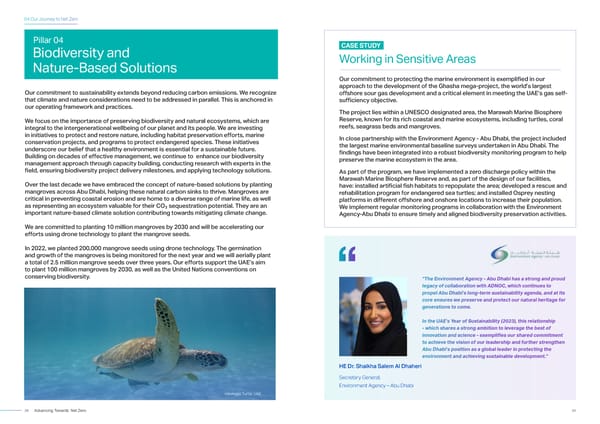
Biodiversity and Nature-Based Solutions Pillar 04 Our commitment to sustainability extends beyond reducing carbon emissions. We recognize that climate and nature considerations need to be addressed in parallel. This is anchored in our operating framework and practices. We focus on the importance of preserving biodiversity and natural ecosystems, which are integral to the intergenerational wellbeing of our planet and its people. We are investing in initiatives to protect and restore nature, including habitat preservation efforts, marine conservation projects, and programs to protect endangered species. These initiatives underscore our belief that a healthy environment is essential for a sustainable future. Building on decades of effective management, we continue to enhance our biodiversity management approach through capacity building, conducting research with experts in the field, ensuring biodiversity project delivery milestones, and applying technology solutions. Over the last decade we have embraced the concept of nature-based solutions by planting mangroves across Abu Dhabi, helping these natural carbon sinks to thrive. Mangroves are critical in preventing coastal erosion and are home to a diverse range of marine life, as well as representing an ecosystem valuable for their CO2 sequestration potential. They are an important nature-based climate solution contributing towards mitigating climate change. We are committed to planting 10 million mangroves by 2030 and will be accelerating our efforts using drone technology to plant the mangrove seeds. In 2022, we planted 200,000 mangrove seeds using drone technology. The germination and growth of the mangroves is being monitored for the next year and we will aerially plant a total of 2.5 million mangrove seeds over three years. Our efforts support the UAEs aim to plant 100 million mangroves by 2030, as well as the United Nations conventions on conserving biodiversity. Working in Sensitive Areas Our commitment to protecting the marine environment is exemplified in our approach to the development of the Ghasha mega-project, the worlds largest offshore sour gas development and a critical element in meeting the UAEs gas self- sufficiency objective. The project lies within a UNESCO designated area, the Marawah Marine Biosphere Reserve, known for its rich coastal and marine ecosystems, including turtles, coral reefs, seagrass beds and mangroves. In close partnership with the Environment Agency - Abu Dhabi, the project included the largest marine environmental baseline surveys undertaken in Abu Dhabi. The findings have been integrated into a robust biodiversity monitoring program to help preserve the marine ecosystem in the area. As part of the program, we have implemented a zero discharge policy within the Marawah Marine Biosphere Reserve and, as part of the design of our facilities, have: installed artificial fish habitats to repopulate the area; developed a rescue and rehabilitation program for endangered sea turtles; and installed Osprey nesting platforms in different offshore and onshore locations to increase their population. We implement regular monitoring programs in collaboration with the Environment Agency-Abu Dhabi to ensure timely and aligned biodiversity preservation activities. CASE STUDY: CASE STUDY The Environment Agency - Abu Dhabi has a strong and proud legacy of collaboration with ADNOC, which continues to propel Abu Dhabis long-term sustainability agenda, and at its core ensures we preserve and protect our natural heritage for generations to come. In the UAEs Year of Sustainability (2023), this relationship - which shares a strong ambition to leverage the best of innovation and science - exemplifies our shared commitment to achieve the vision of our leadership and further strengthen Abu Dhabis position as a global leader in protecting the environment and achieving sustainable development. HE Dr. Shaikha Salem Al Dhaheri Secretary General, Environment Agency Abu Dhabi 04 Our Journey to Net Zero Hawksbill Turtle, UAE 39 38 Advancing Towards Net Zero
 Advancing Towards Net Zero: Delivering Progress Page 18 Page 20